As the 1930s unfolded, the optimism of the 1920s gave way to crisis, disillusionment, and violence. In the 1930s and during WW2, artists confronted censorship, exile, and war, and had to rethink art’s purpose. This course explores how creativity persisted, adapted and resisted under difficult circumstances.
Online course (Zoom)
Fridays, from 1 to 3 pm
Starting on 5 June 2026, ending on 10 July 2026 (6 weeks)
Cost: £84 (please see below for payment)
Video-notes will be provided to all.
This six-week course examines the art of the 1930s and World War Two, a period defined by economic depression, fascism, exile, and war. We begin with artists’ responses to the rise of fascist regimes in Europe throughout the 1930s, culminating in the 1937 exhibitions. Pablo Picasso, Joan Miro, Robert Delaunay, Raoul Dufy, and Vera Mukhina all took part in the Paris Exposition Universelle, where democratic powers and totalitarian forces symbolically faced off. The 1937 Exhibition of Degenerate Art provides a crucial case study in cultural censorship, confiscation, and the ongoing quest to recover looted work.
Alongside more overtly political responses, the luminous decorative panels of Raoul Dufy reveal a parallel vision of modern spectacle and national display, while Constantin Brancusi, Alberto Giacometti, Naum Gabo, Alexander Calder, and Barbara Hepworth all experimented with sculptural forms and materials.
Turning to the American continent, we will explore state patronage and democratic image-making. In the U.S., the New Deal reshaped artistic production, from the regionalist vision of Grant Wood to the socially engaged art of Ben Shahn, Jacob Lawrence, and Alice Neel. We will also study the deeply unique style and iconography of Georgia O’Keeffe, and Frida Kahlo.
Wartime ideals and mass circulation are examined through Norman Rockwell, while in Britain official war artists such as Paul Nash, Eric Ravilious, Laura Knight, and Henry Moore documented destruction and endurance. Looking into occupied France, we will seek to understand what happened to artists and works of art in Paris and elsewhere and how they continued to create. After focusing on war art, we will consider the fragile yet powerful images made under extreme precarity in camps or in hiding, including that of artists Felix Nussbaum and Charlotte Salomon.
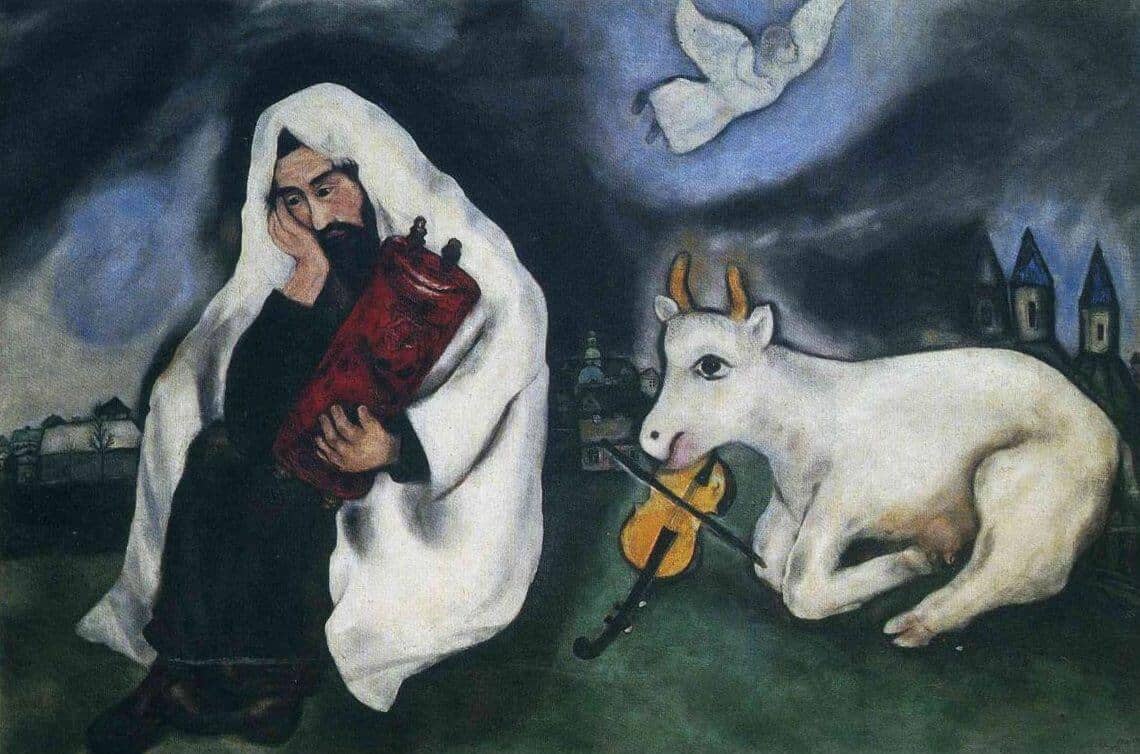
Throughout this period, the experience of exile was central. Figures such as Max Beckmann, Naum Gabo, Max Ernst, Kokoschka, Heartfield, Grosz, and Chagall all went into exile and continued to create art, often denouncing fascism, and continuing modernist experiments. Their presence had a meaningful impact on shifting the art scene’s centre to places such as New York. Rothko and Pollock were deeply influenced by German artists in exile, leading towards Abstract Expressionism.
Cost: £84
Payment is via Stripe with your bank card. It is easy and safe. If necessary, refunds can be processed with Stripe. Once you’ve paid, I get an email, and I will then email you the course’s Zoom link and further details. Please check the terms and conditions to see the policy about cancellations and refunds. If you have any issues or questions, do not hesitate to get in touch (see “contact” above).
To enrol, and pay £84, please click on the button below. Thanks!
Leave a Reply