This short course explores how modern painters and sculptors engaged with dance as subject and symbol. From Matisse and Nolde to the sculptor Gaudier-Brzeska, we will see how dance expressed some key values of the avant-garde spirit, such as freedom.
Online course (Zoom)
Mondays, from 10 am to 12
3 weeks, starting on 1 June and ending on 15 June 2026
Cost: £42
If you miss a session, you will have the slides and “video-notes” to catch up.
This short course explores how painters and sculptors at the turn of the 20th century engaged with dance, both as a subject and as a metaphor for the spirit of modernism. In the first decades of the 20th century, the representation of dancers became a vital way for artists to experiment with new forms, colours, and ideas, while dance itself embodied the energy, freedom, and rhythm that defined the avant-garde.
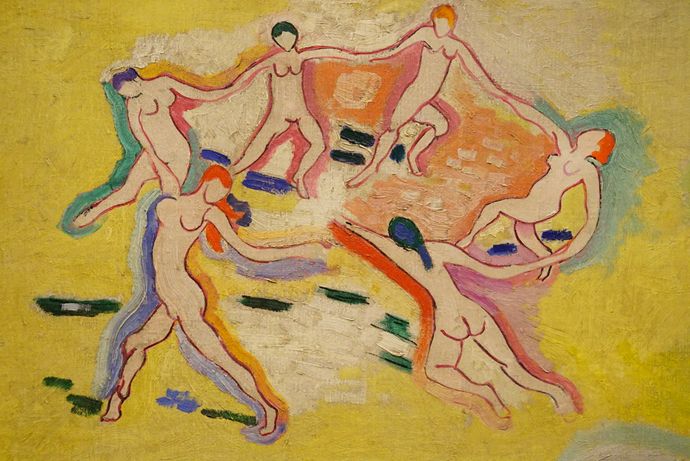
We will begin by examining depictions of dancers in painting and sculpture. From Toulouse-Lautrec’s depictions of performers to Matisse’s Dance and the expressive works of Ernst Ludwig Kirchner and Emil Nolde, artists sought to capture the vitality of bodies in motion. In sculpture, Rodin’s studies of dancers and Gaudier-Brzeska’s dynamic works gave way to modernist experiments by Brancusi who asked dancers to perform in his studio amongst his sculptures. We will discuss how dancers were both real subjects—ballerinas, stars of the stage—and powerful symbols of transformation, sensuality, and modern life.
A second focus will be the impact of contemporary performances on the visual arts. Figures such as Isadora Duncan, Loie Fuller, Mary Wigman, and Margaret Morris redefined dance through free expression and innovative staging, while Sergei Diaghilev’s Ballets Russes revolutionised ballet with daring collaborations between choreographers, composers, and artists including Picasso, Bakst, and Matisse, and Goncharova. These encounters between stage and studio offered artists new languages of colour, movement, and theatricality.
Illustration above: detail from Matisse’s Bonheur de Vivre (1906, Barnes Foundation, Philadelphia)
Cost: £42
Payment is via Stripe with your bank card. It is easy and safe. If necessary, refunds can be processed with Stripe. Once you’ve paid, I get an email, and I will then email you the course’s Zoom link and further details. Please check the terms and conditions to see the policy about cancellations and refunds. If you have any issues or questions, do not hesitate to get in touch (see “contact” above).
To enrol, and pay £42, please click on the button below. Thanks!

Rodin, Nijinsky (1912), Gaudier-Brzeska (1913), The Dancer, Camille Claudel, The Waltz (1893)
Leave a Reply